
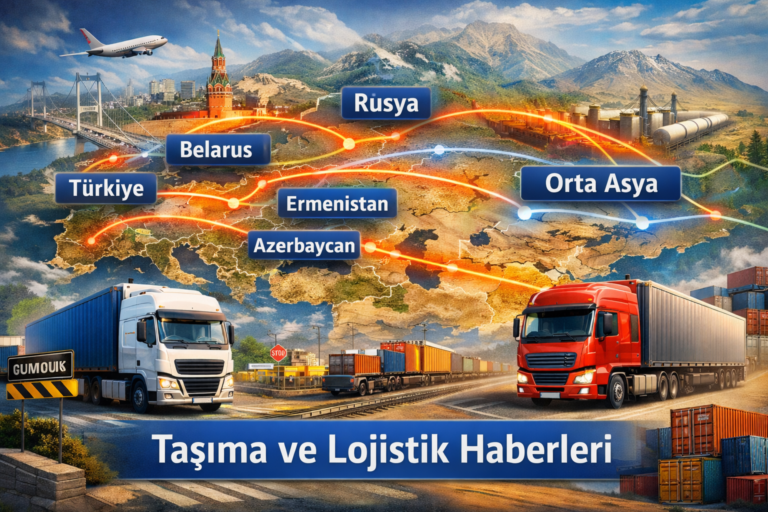
🇹🇷 Turkey
1) New control procedure for international cargo transportation, in force since October 2025
Turkey has tightened control over international transit road freight transport:
Cabotage by foreign trucks within Turkish territory is prohibited. Penalties have increased and enforcement has become stricter. Inspections are carried out not only at the borders but also on internal highways.
Foreign carriers must have original or verifiable electronic versions of permits/licenses and maintain full documentation, including ECMT permits, vehicle logbooks, and other related records.
2) Delivery times from Turkey to Russia have increased
The average sea freight delivery time from Turkey to Russia has increased by approximately 1.5-1.6 times due to new vessel entry rules and port procedures, which is affecting demand for road and multimodal transit.
Links for publication:
Турция: с октября действует новый порядок инспекций международных автомобильных перевозок
https://growex-group.ru/press-center/publications/news/turtsiya-uzhestochaet-kontrol-perevozok-i-menyaet-logistiku-na-marshrute-v-rossiyu/
https://logirus.ru/news/custom_and_ved/shtorm_na_tamozhne_gruzy_iz_turtsii_idut_dolshe_a_stoyat_dorozhe.html
🇷🇺 Russia
1) Federal Law No. 140-FZ of June 7, 2025
This is a key law that is being actively implemented in 2025-2026:
From March 1, 2026, the freight forwarders’ register is expected to become operational. Companies and sole proprietors must be entered into the register in order to operate legally.
From September 1, 2026, mandatory electronic document management (EDM) will apply to all participants in freight transportation, including road, rail, and air transport. This includes electronic transport waybills (ETrN) and other documents.
This will have a major impact on foreign trade operations, process digitalization, and interaction with customs authorities.
2) New procedure for maintaining the carriers’ register and stricter controls
There is a draft proposal to postpone the deadline for carriers to register in the “GosLog” register to March 1, 2027, which will affect those who fail to complete digital registration during 2026.
Useful links for publication:
https://stelspb.ru/s-2026-goda-v-logistike-rossii-vstupayut-klyuchevye-izmeneniya-reestr-ekspeditorov-i-obyazatelnye-elektronnye-transportnye-nakladnye/
https://kontur42.ru/logistika/tpost/kkpxd6aba1-zakon-140-fz-ot-7-iyunya-2025-goda-chto
https://pooling.me/news/tpost/fertilglc1-dve-dati-goslog-1-marta-2026-i-1-marta-2
Transit through the Caucasus and Central Asia
1) The Middle Corridor is growing as an alternative to the Northern Transport Corridor
Freight transit along the route China → Kazakhstan → Azerbaijan → Georgia → Turkey continues to grow. Volume increased by more than 60% in 2024, and further growth is expected in 2025/2026.
2) Azerbaijan is promoting the “Turkic Trade Corridor”
The President of Azerbaijan announced a project to integrate routes into a transcontinental logistics corridor from Central Asia to Europe, strengthening Baku’s role as a transport hub.
3) The first transit cargo through Azerbaijan to Armenia in decades
In November 2025, for the first time in decades, a shipment of cargo (wheat) was sent from Russia through Azerbaijan and Georgia to Armenia, symbolizing real progress in restoring transport links.
4) The Zangezur Corridor as a strategic initiative
The project aimed at strengthening links between Azerbaijan and Nakhchivan through Armenia is becoming important for Turkic connectivity and for reducing transit distances to Europe.
5) Transport integration in Central Asia
Central Asian countries are actively developing new corridors, including the joint plans of Uzbekistan, Afghanistan, and Pakistan for the “Termez – Kabul – Peshawar” route, as well as the digital integration of the customs systems of Uzbekistan and Kazakhstan.
Links for publication:
https://www.dailysabah.com/business/transportation/middle-corridor-emerging-as-major-trade-link-strengthening-turkiyes-role
https://ccbsnews.info/en/news/detail/
https://oc-media.org/first-cargo-transit-set-to-reach-armenia-via-azerbaijan/
https://ru.trend.az/azerbaijan/business/4140772.html
https://t.me/s/SBSLogisticsAsia?before=957
📌 EAEU and digital initiatives relevant for Russia / Belarus / Kazakhstan
Agreement on navigation seals and the unified EAEU customs transit system
This agreement, expected to come into force on February 1, 2026, will enable digital tracking of transportation across the EAEU. This is directly relevant to logistics, reducing border checks, and increasing transit speed.
https://ru.wikipedia.org/wiki

Current legislative changes
1. New requirements for temporary storage warehouses – effective August 26, 2025
Updated rules for the arrangement, equipment and location of temporary storage warehouses (TSW) have come into force. Warehouse owners are now required to comply with strict regulations of the Federal Customs Service (FCS), including requirements for security, technical equipment and compliance with procedures.
2. Tightening control over cargo transportation- from September 2025 onwards
On September 1, 2025, amendments will come into force to strengthen control over freight forwarding activities: fines will be increased, mandatory registers of participants and new procedures for processing documents will be introduced.
Also, from March 1, 2026, the functionality of the forwarders’ register will be introduced, and from September 2026 – a full transition to electronic document management.
3. Multimodal bill of lading- as of September 2025
It is expected to introduce a single transport document that can be used for combined transportation – road + rail + sea/aviation. This will facilitate document flow and increase the transparency of logistics.
4. Amendments to the CAO RF on administrative violations
nnovations in Article 11.14 of the CAO introduce additional penalties for freight forwarders. These changes come into force from March 1, 2026, which gives you time to prepare.
5. Confidentiality of logistics information becomes critical
The draft law provides for punishment (up to 7 years imprisonment) for disclosure of information on the supply of sanctioned goods or financial schemes, which emphasizes the need for caution in logistics activities.
Recommendations from Betainvest
Select a temporary storage facility that complies with the new requirementsto avoid fines and downtime.
Prepare for the launch of an electronic forwarder register and electronic consignment notes – Set up your internal processes now.
Update contracts and procedurestake into account new fines and administrative risks.
Limit the disclosure of logistics schemesespecially those related to sanction-controlled goods – this is a matter of business security.
Keep up with legislative changesto operate smoothly even in a challenging environment.

