
🇷🇺 Russia:
advice and recommendations for carriers and freight customers (2026 version)
🚛 Betainvest works at the intersection of the interests of carriers and freight customers. We see that the key to stable delivery across Russia today is documentation, weight and dimension control, transparent pricing, and predictable routing.
For transport companies
1) Check documents in advance
Review the contract or order, the CMR or TTN depending on the operating format, insurance documents, powers of attorney, special permits for oversized or heavy cargo, as well as regional passes and restrictions. A mistake at the border or at a control point often costs more than the trip itself.
2) Keep weight and dimensions under control, because enforcement has become stricter
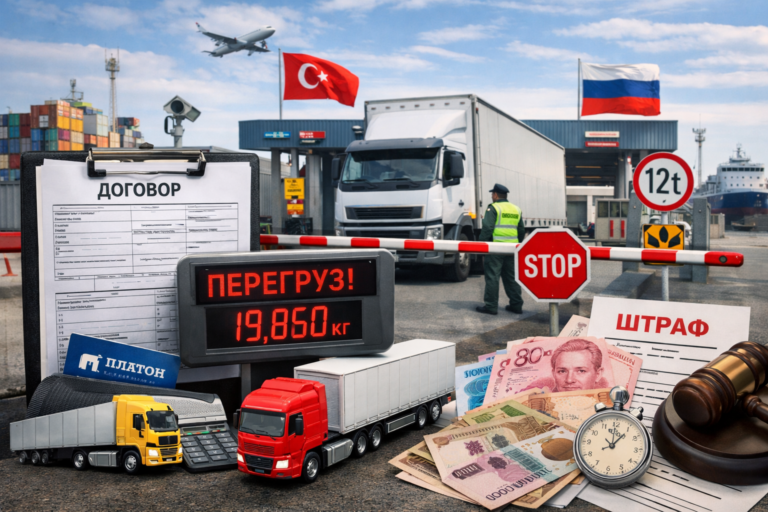
Today, the chance of “slipping through” is increasingly turning into the risk of facing the maximum penalties. In cases of overload or dimensional violations, fines for the vehicle owner may reach 600,000 rubles depending on the level of excess.
Liability for evading weight and dimension control has also been strengthened, and the limitation period for such cases has been extended to one year, which significantly reduces the chance of simply forgetting the issue and moving on.
3) Build “Platon” into your cost structure in advance
Until 31.01.2026, the Platon system website lists a calculated charge of 3.34 rubles per kilometer under the current coefficient.
A phased increase has already been approved: from March 1, 2026, the coefficient changes from 0.51 to 0.75, and the discount is planned to be fully removed from February 1, 2028.
This needs to be included in pricing and in negotiations with customers in advance, not explained afterwards.
4) Optimize the route not by the prettiest line on the map, but by risk exposure
It is necessary to consider where there are more weighing stations and inspections, where seasonal restrictions apply, and where repairs and detours are in place. In many cases, it is more profitable to drive 70 kilometers farther if that avoids delays and unpleasant surprises.
5) Invest in driver support
Communication, navigation, fuel solutions, transparent allowances, and a clear procedure for passing control points are cheaper than losing a trip because of chaos on the road.
6) Work through a reliable intermediary for documents and settlements
If a partner takes care of checking the document package, providing financial guarantees, and preparing closing documents, you face fewer risks of payment delays or later claims.
For freight customers
1) Define the task as precisely as possible
The type of cargo, class, special conditions, weight and dimensions, deadlines, loading and unloading points, operating mode, and requirements for the vehicle and paperwork should all be clearly specified.
2) Evaluate not only price, but also risk manageability
Transportation without proper insurance and weight control can turn into downtime, fines, and missed delivery deadlines.
3) Plan costs taking road charges and inspections into account
If the carrier is forced to absorb rising costs inside the rate, including those related to Platon, the customer will still pay for it later, only in a more conflict-prone form.
4) Use warehouses and responsible storage solutions
If the cargo is not ready for the next leg of transportation, warehousing helps solve timing and safety issues and reduces chaos on site.
5) Request transparent documents
Invoices, acts, closing documents, and service breakdowns make life easier for accounting and reduce the number of disputes.
The role of Betainvest in Russia
We help both carriers and customers keep logistics under control:
document verification and support,
financial guarantees and transparent calculations,
route selection and storage solutions,
coordination of all parties so that cargo moves instead of being endlessly discussed.
🤝 Conclusion
Proper freight organization in Russia in 2026 is a matter of balance of interests and discipline: documents, weight and dimension control, calculations, and cost planning. Betainvest acts as the connecting link, reducing risks and increasing predictability.
🇹🇷 Turkey:
advice and recommendations for carriers and freight customers (2026 version)
🚛 In Turkey, the main trend is quite clear: digital reporting, strong enforcement powers, and constant updates to penalties and rules for carriers.
For transport companies
1) Make sure your operations are fully compliant with permit requirements
For commercial transportation, the appropriate Yetki Belgesi is essential, and the category depends on the type of transport. Violations related to permits and documentation are becoming more expensive because penalties under Law No. 4925 are regularly revised and indexed.
2) Keep track of updates to penalties under Law No. 4925
Changes to administrative fines under Karayolu Taşıma Kanunu No. 4925, Article 26, entered into force on September 30, 2025.
For 2026, fine tables under this article are being published and used as the basis for risk and cost calculations.
3) Keep U-ETDS reporting in order, not in the “we’ll deal with it later” mode
There are official administrative instructions and documents for U-ETDS, and the system is genuinely used as a tool for transport control.
The practical conclusion is simple: assign a responsible person, create a trip checklist, and record data on time so that small violations do not turn into a systemic problem.
4) Take border and buffer-zone rules into account
The amendments to the Karayolu Taşıma Yönetmeliği contain direct restrictions: in border and buffer zones, certain operations, such as transshipment, unloading, or storage, are prohibited outside designated sites and without customs supervision.
This is particularly important for international trips and connecting operations.
5) Do not cut costs on driver operational support
Communication, navigation, clear route and checkpoint instructions, parking plans, and confirmation of documents on a phone are all cheaper than dealing with problems on the road. In Turkey, a lot of control takes place directly en route, and disorder in paperwork often costs more than fuel.
For freight customers
1) Provide the most accurate transport brief possible
The type of cargo, volume, weight, dimensions, storage and temperature requirements, packaging, deadlines, and requirements for the vehicle and documents should all be specified clearly. The more accurate the initial data, the fewer surprise surcharges there will be.
2) Check not only the price, but also whether the carrier complies with requirements
Proper permits, records, and procedures reduce the risk of delays, fines, and delivery disruption.
3) Plan warehousing and transfer stages according to the rules
This is especially important if transshipment or repacking is expected near the border. In Turkey, this is a particularly sensitive area of regulation.
4) Demand a transparent financial structure
A contract, closing documents, and a breakdown of transport, warehousing, and support services protect you in disputes and simplify budget control.
The role of Betainvest in Turkey
Betainvest helps Turkish carriers and shippers:
structure documents and the entire trip process,
reduce risks at transfer points and in international chains,
organize settlements and supporting documents,
build a clear logistics scheme without surprises.
🤝 Conclusion
In Turkey, the winners are not those who hope things will somehow work out, but those who keep documents and digital discipline in order. Betainvest helps make transportation predictable and safe for both sides.

